
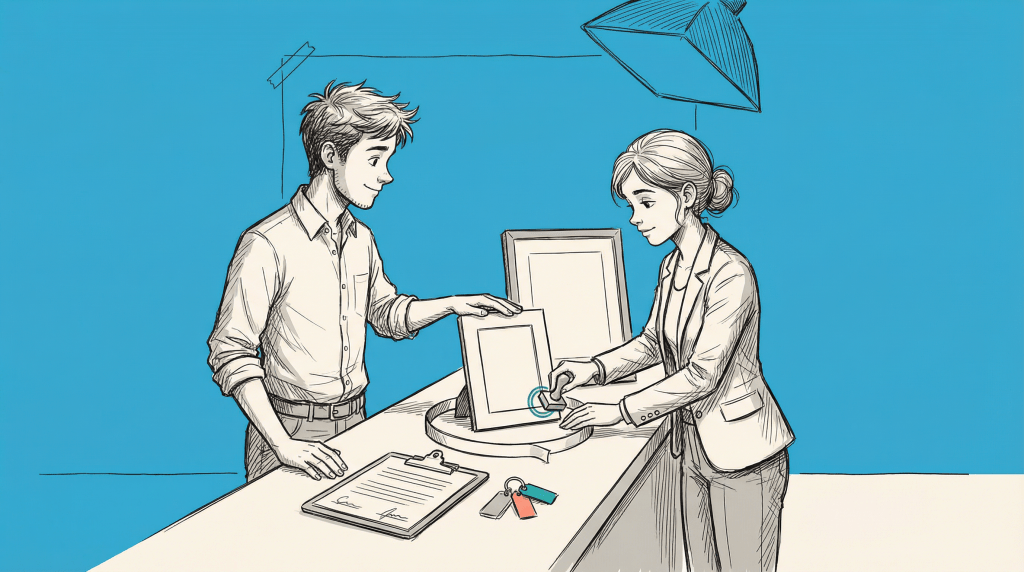
- A model release form for minors is a legal document granting permission to use a child’s image in photography, video, or advertising — signed by a parent or guardian, not the minor.
- Photographers and businesses working with anyone under 18 need one before capturing or publishing any images commercially.
- Because minors cannot legally enter contracts, parental or guardian consent is mandatory in every U.S. jurisdiction.
- Without a signed release, you face potential lawsuits for unauthorized use of a minor’s likeness, reputational damage, and injunctions against published work.
- GO LAW’s free model release template creates a complete, personalized document; use GO Draft to generate your fully customized version in minutes.
A model release form for minors is a crucial document that grants permission for a minor’s image to be used in various media, including photography, video, and advertising. Its primary purpose is to protect the rights of both the young talent and the photographers or businesses engaging them. This document serves as a legal agreement that outlines how and where the images will be used, ensuring that all parties are aware of their rights and responsibilities.
When working with minors, it is essential to understand that they cannot legally enter into contracts without parental consent. Thus, a model release form for minors must include specific provisions that require the signature of a parent or guardian. This ensures that the adult responsible for the child agrees to the terms outlined in the document. By having this form in place, you can create a professional and ethical environment that respects the rights of young talent.
It is important to note that model release forms can vary based on the project and the intended use of the images. Therefore, it is wise to familiarize yourself with the different types of releases and adapt them to meet your specific needs. This guide aims to provide a comprehensive understanding of model release forms for minors, so you can effectively protect young talent while navigating the complexities of the modeling industry.
✎ Draft Your Model Release Form for Minors in Minutes with GO Draft
GO LAW’s AI-powered document drafter walks you through a simple questionnaire and generates a complete, customized model release form for minors — ready to review, sign, and use on set. No legal jargon, no hourly fees. (Or if you’d prefer, you can speak with an attorney.)
Create My Model Release Form with GO Draft →Why Model Release Forms Are Crucial for Underage Talent
Model release forms are essential for underage talent because they ensure legal protection and clarity regarding the use of a minor’s image. By having a signed release, you safeguard yourself against potential legal disputes that may arise from unauthorized use of the child’s likeness. Without a release, you may face challenges that could lead to lawsuits, accusations of exploitation, or damage to your reputation as a photographer or business.
Moreover, these forms establish clear expectations between you and the minor’s guardians. They outline how the images will be used, whether for commercial purposes, social media, or other platforms. By setting these parameters, you can avoid misunderstandings and ensure that the minor’s rights are respected throughout the process. This clarity is particularly important in today’s digital landscape, where images can be shared widely and rapidly.
Additionally, a model release form for minors can help promote a sense of professionalism in your work. By taking the time to draft and obtain a release, you demonstrate that you are serious about your craft and respectful of the young talent you work with. This practice builds trust with parents and guardians, encouraging them to collaborate with you on future projects and fostering a positive working relationship.
Key Components of a Model Release Form for Minors
When creating a model release form for minors, several key components must be included to ensure its legality and effectiveness. These elements should address the specific needs of your project while also adhering to legal requirements. Here are the primary components you should consider:
Identification of Parties: Clearly identify the minor, their parent or guardian, and the photographer or business. Include full names, addresses, and contact information to avoid any confusion regarding who is involved in the agreement.
Description of Use: Specify how the images will be used. This includes details about the project, the intended audience, and any specific media platforms where the images may appear. Providing this information helps parents understand the full scope of the agreement.
Duration of Use: Indicate how long the images can be used — either a specific time frame or a perpetual license. Parents may be more comfortable granting permission if they know how long their child’s image will be in circulation.
Compensation: If applicable, outline any compensation that will be provided to the minor or their family. This could range from a flat fee to royalties based on the project’s success. Transparency in compensation builds trust and ensures everyone is on the same page.
Revocation Clause: Include a clause that allows the parent or guardian to revoke the agreement under certain circumstances. This demonstrates respect for their rights and provides an exit strategy should the need arise.
By incorporating these components into your model release form for minors, you create a comprehensive document that protects all parties involved and fosters a positive working relationship.
Legal Considerations When Using Minors in Photography and Modeling
Using minors in photography and modeling involves various legal considerations that must be navigated carefully. The most fundamental requirement is parental consent: since minors cannot legally enter contracts, you must obtain a signed release from a parent or guardian before proceeding with any project. Failure to do so can lead to significant legal repercussions, including lawsuits for unauthorized use of the minor’s likeness under state right-of-publicity laws.
Additionally, it’s essential to comply with local, state, and federal laws regarding child labor. Many jurisdictions have strict regulations governing the hours minors can work, the types of work they can perform, and the conditions under which they can be employed. For example, California’s Coogan Law requires that 15% of a minor’s gross earnings be set aside in a blocked trust account. Understanding these laws is vital to ensure you are operating within legal parameters and genuinely protecting the welfare of young talent.
You should also be aware of the potential for exploitation in the modeling industry. Parents and guardians are often concerned about their children’s safety and well-being, and as a responsible photographer or business, you must be sensitive to these concerns. Establishing clear boundaries, maintaining open communication, and keeping a parent or guardian present during any shoot all help create a professional, trustworthy environment. For more on protecting personal legal rights, explore GO LAW’s Knowledge Base.
How to Obtain Parental Consent: Best Practices
Obtaining parental consent is a critical step when working with minors in photography and modeling. To ensure this process runs smoothly, consider implementing the following best practices:
Communicate Clearly: Before any photoshoot or project begins, have a detailed conversation with the parent or guardian about what the project entails. Explain how their child’s image will be used and address any concerns they may have. Transparency is the foundation of trust.
Provide Written Information: Alongside the model release form, give parents written information about the project, including any potential risks or benefits. This allows them to make fully informed decisions and feel more secure in granting consent.
Schedule a Meeting: If possible, arrange a face-to-face meeting with the parent or guardian to discuss the model release form. This personal approach can alleviate concerns and allow for a more comprehensive discussion about the project.
Be Patient and Respectful: Understand that parents may require time to review the release form and ask questions. Patience throughout this process leads to a more positive experience for both you and the family.
By following these best practices, you foster a collaborative environment that respects the rights and concerns of the minor’s guardians while ensuring a successful project.
Free Resources: Where to Find Model Release Form Templates for Minors
Finding a suitable model release form template for minors can save time and ensure all necessary legal elements are included. Here are several resources where you can find free templates specifically designed for minors:
GO LAW GO Draft: GO LAW’s GO Draft tool generates a complete, customized model release form for minors based on your specific project details — free, no hourly fees, and available immediately.
Photography Associations: Many professional photography organizations provide members with access to legal resources, including model release forms. The American Society of Media Photographers (ASMP) offers downloadable templates as part of its member resources.
Creative Commons: Some photographers share their model release forms through Creative Commons, allowing you to adapt their templates for your use — a great way to explore various formats and find one that suits your needs.
Community Forums: Online photography forums and social media groups can be excellent places to find shared resources. Many photographers are willing to share their experiences and templates, providing a wealth of practical knowledge.
By utilizing these resources, you can quickly find a model release form for minors that meets your requirements while ensuring legal compliance.
Customizing Your Model Release Form for Different Projects
One size does not fit all when it comes to model release forms for minors. Depending on the specifics of your project, you may need to customize the release to cater to the unique circumstances involved. Here are a few key considerations for tailoring your model release form:
Project Type: Different projects require different language or details. A commercial shoot for a product may involve different considerations than a personal portrait session. Adjust the terms accordingly to accurately reflect the work being done.
Distribution Channels: If you plan to use the images across various platforms — social media, print, television, or online advertising — clearly outline each channel in your release so parents are fully informed of where their child’s image will appear.
Compensation Terms: If your project involves different compensation structures, tailor the release to reflect this. For example, if you plan to offer royalties based on sales or exposure, include those specific terms.
Duration of Use: If the project has a specific timeframe for usage, be explicit about this in the release. If the images are intended for long-term or perpetual use, specify that clearly so parents fully understand how their child’s likeness will be employed over time.
By customizing your model release form for different projects, you ensure that all parties are aligned and that the document accurately reflects the nature of your engagement with the minor.
Common Mistakes to Avoid When Creating Release Forms for Young Models
Creating a model release form for minors is a critical step in any project involving young talent. However, there are several common mistakes that undermine the document’s effectiveness and legal standing:
Inadequate Details: Failing to include sufficient details about the project — such as how the images will be used and for how long — leads to misunderstandings. Always be as specific as possible to prevent confusion and protect all parties.
Missing Signatures: One of the most critical aspects of a model release form is obtaining the necessary signatures. Ensure that both the parent or guardian and the photographer sign the document. Without these signatures, the release is not valid.
Neglecting Legal Compliance: Each jurisdiction may have unique legal requirements regarding model releases. Failing to adhere to these laws can expose you to significant legal risks. Always research and ensure your document complies with local and state regulations.
Not Updating Templates: Using outdated templates can leave out crucial provisions or fail to reflect legal changes. Regularly review and update your model release forms to reflect current laws and best practices.
By avoiding these common mistakes, you create a model release form for minors that effectively protects all parties involved and minimizes the risk of legal complications.
Digital vs. Physical Model Release Forms: Pros and Cons
In today’s digital age, photographers and businesses have the option to use either digital or physical model release forms. Each format comes with its own set of advantages and disadvantages.
Digital Model Release Forms
Pros:
- Convenience: Digital forms can be easily distributed and signed online, allowing for quick access and minimal paperwork.
- Storage: Digital forms are easier to store and organize. You can keep them in cloud storage or dedicated software, making retrieval simple.
- Environmentally Friendly: Using digital forms reduces paper waste, contributing to a more sustainable practice.
Cons:
- Security Concerns: Digital documents may be susceptible to unauthorized access, posing a risk to the privacy of the minor and their family.
- Technical Issues: Not all parents may be comfortable with technology, which could create friction when obtaining consent.
Physical Model Release Forms
Pros:
- Personal Touch: Physical forms allow for face-to-face discussions that build trust and clarity between you and the minor’s family.
- Security: Paper documents may feel more secure to some individuals, as there is no risk of online data breaches.
Cons:
- Cumbersome: Managing physical documents can be cumbersome and lead to lost forms or disorganization over time.
- Limited Accessibility: Physical forms can only be signed in person, which may not be practical in all situations.
Ultimately, the choice between digital and physical model release forms depends on your specific needs and the preferences of the families you work with. Many photographers use platforms like FlowSign to handle digital signing securely and efficiently — a practical middle ground that combines convenience with a professional paper trail.
Storing and Managing Model Release Forms for Minors: Tips for Photographers
Once you have obtained signed model release forms for minors, effective storage and management practices are essential to keep the documents secure and accessible. Here are some key tips:
Organize by Project: Create a systematic filing system — either digitally or physically — that organizes forms by project. This makes it far easier to locate specific releases when needed.
Use Encryption: If you store digital forms, use encryption to protect sensitive information and add an extra layer of security against unauthorized access.
Regular Backups: Regularly back up your digital files to prevent data loss in the event of a technical failure.
Clear Retention Policy: Establish a retention policy that outlines how long you will keep model release forms. Once the retention period has passed, securely dispose of the documents to protect the minor’s personal information.
By implementing these practices, you can effectively manage your model release forms for minors, ensuring they are both secure and easily accessible for future reference.
Ethical Considerations When Working with Underage Models
Working with underage models involves ethical considerations that extend well beyond legal compliance. As a photographer or business, approaching these situations with sensitivity and genuine respect for the child is paramount. Here are key ethical guidelines to keep in mind:
Prioritize the Minor’s Well-Being: Always consider the emotional and mental well-being of the young talent. Ensure the environment is safe, comfortable, and conducive to a positive experience — never push a child past their comfort level for the sake of a shot.
Respect Privacy: Be mindful of the minor’s privacy and their family’s privacy. Avoid sharing personal information or images without explicit consent, even in a professional context.
Involve Parents in Decisions: For any major decisions regarding the project, involve the parent or guardian. This fosters transparency and ensures the family feels respected throughout the process.
Educate Young Models: Where appropriate, educate the minor about their rights and the use of their image. Empowering them with knowledge helps them understand the industry and feel more confident about their participation.
Adhering to these ethical considerations helps create a supportive atmosphere for underage models and contributes to a more respectful modeling industry overall.
Case Studies: When Model Release Forms Protected (or Failed to Protect) Young Talent
Examining real-life scenarios provides valuable insight into the importance of model release forms for minors.
Case Study 1: Successful Protection
In a well-documented scenario, a photographer obtained a comprehensive model release form for a young actress participating in a national advertising campaign. The release included detailed descriptions of how the images would be used, the duration of use, and compensation terms. When the campaign generated unexpected commercial success, the minor’s family felt legally protected and compensated fairly. This case illustrates the value of thorough documentation in protecting the rights of young talent.
Case Study 2: Failure to Protect
Conversely, a photographer who failed to obtain a model release form for a minor faced serious legal challenges when the images were used without parental consent. The child’s family discovered their child’s likeness was being used in an advertising campaign without their approval, resulting in a lawsuit, financial losses, and lasting reputational damage to the photographer. This serves as a cautionary reminder: neglecting to secure proper legal documentation when working with minors carries significant risk.
These scenarios underscore the critical role that model release forms play in protecting young talent and the serious consequences of overlooking this essential step.
Future Trends in Model Release Forms for Minors in the Digital Age
As technology continues to evolve, so too do the practices surrounding model release forms for minors. Several trends are likely to shape the future of these documents:
Focus on Privacy Policies: With growing concerns about data privacy — particularly under laws like the Children’s Online Privacy Protection Act (COPPA) — future model release forms will likely include more robust privacy provisions outlining how personal data is stored, used, and protected.
Greater Emphasis on Inclusivity: As the modeling industry evolves, release forms may need to adapt to include considerations for diverse backgrounds and experiences, ensuring all young talent feels valued and respected.
Enhanced Education and Resources: As more photographers and businesses recognize the importance of model release forms, demand for educational resources and standardized templates will grow — helping raise the ethical floor across the industry.
By keeping pace with these trends, you can ensure your practices align with the evolving legal and ethical landscape of the modeling industry.
Conclusion: Safeguarding Young Talent in the Modeling Industry
Understanding and implementing model release forms for minors is a vital aspect of working with young talent in the photography and modeling industry. By recognizing the legal, ethical, and practical implications of these forms, you can create a safe and respectful environment for minors and their families.
As you move forward, remember the importance of clear communication, proper documentation, and ethical conduct. By doing so, you not only protect yourself and your business but also contribute to the overall well-being of young talent in the industry.
If you need assistance drafting a model release form tailored to your specific project, GO LAW’s GO Draft tool guides you through a simple questionnaire and generates a complete, personalized document — available as a free PDF. If you’d prefer a licensed attorney to review or modify your agreement, GO LAW connects you with experienced legal counsel after you create your document.
Innovative Model Release Resources
Beyond GO LAW, there are several platforms and resources that can help photographers, businesses, and families manage model releases and legal documents for minors. Here are some of the leading tools worth exploring alongside your GO LAW documents:
- FlowSign — AI-powered document signing that makes executing your model release agreements fast, secure, and fully digital — ideal for obtaining parental consent on the go or remotely.
- DoNotPay — AI-powered legal assistance for a range of consumer legal tasks, including generating and disputing legal documents — useful for photographers handling administrative legal work independently.
- ASMP (American Society of Media Photographers) — The leading professional association for photographers, offering member resources including legal templates, model release guidance, and industry standards for working with minors.
- State Bar Referral Services — Most state bar associations operate lawyer referral programs that can connect you with a family or entertainment law attorney if your project involves complex compensation structures or ongoing commercial use of a minor’s image.
Note: While these platforms offer useful tools, none substitute for personalized legal advice on complex matters involving minors. For projects involving significant compensation, long-term commercial use, or international distribution of a minor’s image, consulting with a licensed attorney is advisable.
🔍 Already Have a Model Release Form? Have GO LAW Review It.
Use GO Review — GO LAW’s AI-powered contract reviewer — to check your existing model release form for minors for missing consent clauses, incomplete usage terms, or gaps in parental authorization before you use it on your next project. (Or if you’d prefer, you can speak with an attorney.)
Review My Model Release Form with GO Review →Frequently Asked Questions: Model Release Form for Minors
Do I need a lawyer to create a model release form for a minor?
You are not legally required to use an attorney to draft a model release form for a minor, but having one reviewed by a qualified professional is advisable for commercial or long-term use. GO LAW’s GO Draft generates a complete, customized release in minutes at no cost — and if you need an attorney to review or modify it for your specific situation, GO LAW connects you with experienced legal counsel.
What’s the difference between using a template and having a custom model release form drafted?
A template gives you a solid legal foundation that covers standard provisions, while a custom-drafted form is tailored to the exact circumstances of your project:
- Template (e.g., GO Draft) — Best for straightforward commercial shoots, social media content, or editorial use where the terms are standard. Fast, free, and legally sound.
- Custom attorney-drafted form — Best for complex multi-platform campaigns, international distribution, significant compensation arrangements, or long-term licensing of a minor’s likeness.
For most photographers, a well-crafted template generated by GO Draft is entirely sufficient.
How often should I update or renew a model release form for a minor?
You should revisit or renew a model release form for a minor when any of the following occur:
- The scope of image use expands beyond what the original release covered (e.g., a new distribution channel or platform)
- The minor turns 18 — at that point, a new adult model release should be obtained
- There is a change in parental custody or guardianship
- The project is extended beyond the original term specified in the release
- State laws in the jurisdiction change requirements for minor releases
What happens if I use a minor’s image without a signed model release form?
Using a minor’s image without a valid signed release can result in serious legal and professional consequences:
- Lawsuits for violation of the minor’s right of publicity under state law
- Injunctions requiring you to immediately stop using the images
- Monetary damages awarded to the minor’s family
- Damage to your professional reputation with clients, agencies, and talent
- Potential child labor law violations if the shoot involved work for compensation
Can a parent or guardian revoke a model release form after signing it?
This depends on the terms of the release and applicable state law, but generally:
- Before images are used — A parent may be able to revoke consent, especially if the release includes a revocation clause. Practical and equitable considerations often favor honoring revocation requests at this stage.
- After images have been published or used — Revocation becomes significantly more complex. If images are already in circulation under a valid release, the right to recall them is generally limited.
Important exception: Some states provide minors with a statutory right to disaffirm contracts upon reaching the age of majority, which could affect even previously signed releases. Consult a licensed attorney if you face a revocation dispute.
What does a model release form for minors cover — and what doesn’t it cover?
A standard model release form for minors covers:
- Permission to photograph, film, or record the minor’s image and likeness
- The specific media and platforms where the images may be used
- The duration and geographic scope of the license
- Compensation terms (if any)
- Parental or guardian authorization in lieu of the minor’s own signature
A model release form does not cover:
- Child labor law compliance (governed separately by state and federal law)
- Permission to use the minor’s name, voice, or personal story beyond what is explicitly stated
- Rights for uses materially different from those described in the release
Is a model release form for minors the same as a child labor permit?
No — these are two distinct legal documents. A model release form is a consent document granting permission to use a minor’s image. A child labor permit (also called a work permit or entertainment work permit) is a government-issued authorization required in many states before a minor can work in a commercial or entertainment capacity. Both may be required for a commercial shoot involving a minor — the release protects image rights, while the work permit ensures compliance with child labor laws. California, New York, and many other states require entertainment work permits for minors. Check your state labor department’s requirements before any paid shoot with a minor.
Additional Resources
For further information on model release forms for minors, parental consent requirements, and child labor laws, the following resources provide authoritative guidance:
- U.S. Department of Labor — Child Labor Rules and Regulations — Federal guidance on permissible work hours, industries, and conditions for minors under the Fair Labor Standards Act.
- FTC — Complying with COPPA: Frequently Asked Questions — Official guidance on the Children’s Online Privacy Protection Act, relevant when publishing minors’ images online.
- American Bar Association — Family Law Resources — Authoritative legal reference on parental consent, minors’ rights, and contract law as it applies to children.
- Nolo — Model Releases FAQ — A practical guide explaining when model releases are required and what they must contain, written for non-lawyers.
- American Society of Media Photographers (ASMP) — Legal Resources for Photographers — Industry-specific legal guidance for photographers working with models of all ages, including minors.
- GO LAW GO Draft — Generate a Free Model Release Form for Minors — Create a complete, personalized model release form for minors in minutes using GO LAW’s AI-powered document drafter.
Last Updated: July 2025